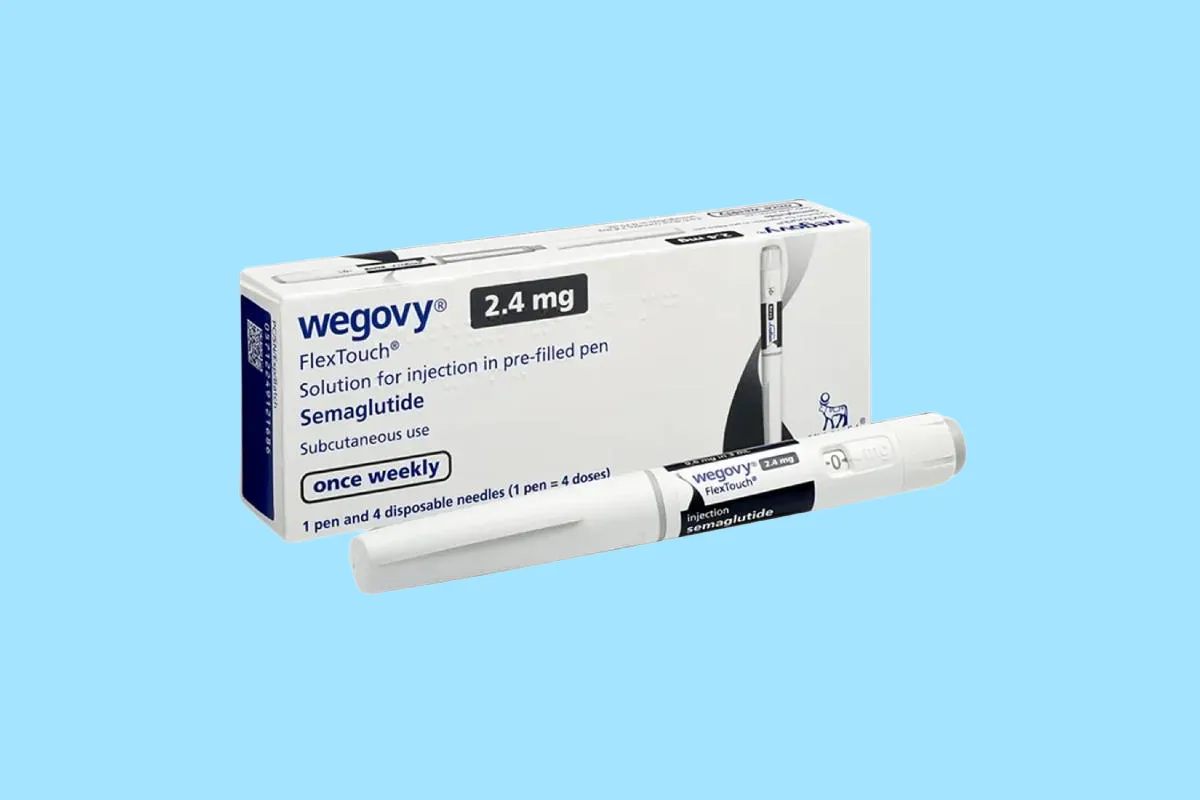
An Evidence-Based Guide to Maintenance, Dose Reduction, and Coming Off Semaglutide
Wegovy (semaglutide) has changed what’s possible for weight management. For many people, it’s the first time weight loss has felt achievable, sustainable, and less dominated by constant hunger or food noise.
But once weight loss happens, a new question almost always follows:
“What happens when I stop?”
Some people want to stay on Wegovy long term. Others want to use it as a tool to reach a healthier weight, then come off it once habits feel more established. Both goals are valid. What matters is understanding what the evidence actually shows, and how to plan a safe, realistic transition.
This article walks through what high-quality studies tell us about stopping Wegovy, what happens to appetite and weight afterwards, and how clinicians typically approach maintenance and dose reduction in real-world practice.
Why stopping Wegovy is such a common question
Wegovy works by mimicking a natural gut hormone called GLP-1, which helps regulate appetite, satiety, and food intake. While on treatment, most people experience:
- Reduced appetite and earlier fullness
- Improved control over eating
- Less food noise and fewer cravings
- Steady, meaningful weight loss
When weight comes down, especially into a healthier range, it’s natural to ask whether the medication is still needed.
Some people worry about:
- Being “on it forever”
- Cost
- Wanting to see if they can maintain weight without medication
- Side effects over the long term
Others simply want a clear exit plan, rather than feeling like they’ve stepped onto a treadmill that never stops.
So what does the evidence say?
What the major trials show when Wegovy is stopped
Two landmark clinical studies give us the clearest answers.
The STEP 4 trial: continue vs stop
The STEP 4 trial is the highest-quality study we have on this question.
In this study:
- Adults with overweight or obesity took Wegovy 2.4 mg weekly for 20 weeks.
- They lost an average of about 10.6% of their body weight during that run-in period.
- Participants were then randomly assigned to either:
- Continue Wegovy, or
- Switch to placebo (effectively stopping the medication).
What happened next was striking.
Over the following 48 weeks:
- People who continued Wegovy lost an additional 7.9% of their body weight.
- People who stopped Wegovy regained 6.9% of their body weight.
In other words, stopping the medication didn’t just slow progress, it reversed it. Improvements in waist circumference, blood pressure, and physical functioning also faded after stopping.
The STEP 1 extension: what happens a year after stopping
Another important piece of evidence comes from the STEP 1 extension study, which followed participants for a full year after they stopped semaglutide.
The results were consistent and sobering:
- Within one year of stopping, participants regained about two-thirds of the weight they had lost.
- The average weight regain was 11.6 percentage points.
- Many cardiometabolic benefits, such as blood pressure and cholesterol improvements, drifted back toward baseline.
This wasn’t because people suddenly stopped caring or abandoned healthy behaviours. It reflects how strongly the body defends its previous weight once pharmacological support is removed.
Why does weight come back after stopping?
This is one of the most misunderstood aspects of obesity treatment.
Appetite regulation doesn’t “reset”
GLP-1 medications like Wegovy don’t permanently reset the body’s weight set-point. Instead, they actively suppress appetite and hunger signalling while you’re taking them.
They work centrally in the brain, particularly the hypothalamus, to:
- Reduce hunger signals
- Increase satiety
- Improve control over eating
They also act peripherally, affecting gut hormones, insulin, glucagon, and fat metabolism.
When the medication is stopped:
- These effects reverse
- Hunger and food intake increase
- The body reasserts its prior weight-regulating signals
In studies, this happens relatively quickly. Appetite often returns before noticeable weight gain, which is why people frequently report feeling “more hungry again” within weeks of stopping.
Weight regain is proportional to weight lost
Meta-analyses show something important and often overlooked:
People who lose more weight on GLP-1 medications tend to regain more weight when they stop.
This suggests the body is actively defending its prior weight range, not passively drifting upward. The medication is opposing that drive while it’s present. When it’s gone, the drive returns.
What about metabolism and health markers?
Weight isn’t the only thing affected.
Studies show that after stopping semaglutide:
- Blood pressure tends to rise toward baseline
- Cholesterol profiles often worsen
- Glycaemic control can deteriorate
- Fat mass returns preferentially compared with lean mass
This is one reason professional guidelines increasingly describe obesity as a chronic, relapsing condition, similar to hypertension or type 2 diabetes.
Does this mean Wegovy must be lifelong?
Not necessarily. But it does mean that stopping should be planned, not treated as an afterthought.
Major guidelines, including the American Diabetes Association and obesity medicine societies, acknowledge that:
- Continuing treatment maintains benefits
- Stopping leads to regain for many people
- Decisions should be individualised and shared
Some people will choose long-term treatment. Others will prioritise coming off medication and accept that some regain risk exists.
Neither choice is “right” or “wrong”.
What about maintenance dosing or stepping down?
This is where things get nuanced.
What the evidence clearly shows
- Continued treatment prevents weight regain.
- The STEP trials maintained people on full-dose therapy (2.4 mg).
- There are no high-quality trials that specifically study planned dose reduction after goal weight is reached.
That’s an important evidence gap.
What guidelines and real-world practice say
Despite the lack of direct trials, major guidelines support:
- Using the lowest effective dose
- Shared decision-making
- Individualised plans
In real-world practice, many clinicians:
- Use a maintenance phase
- Reduce dose gradually
- Monitor appetite, weight stability, and wellbeing
- Adjust based on how the person feels, not just the scales
This approach is not because we have perfect data, but because it aligns with physiology, patient experience, and common sense.
Why there’s no formal “weaning” schedule
Unlike some medications, Wegovy does not require tapering for safety reasons. It can be stopped abruptly without causing withdrawal or harm.
However:
- Appetite rebound is common
- Psychological adjustment can be harder
- Weight regain risk is higher
That’s why “no medical need to taper” is not the same as “tapering isn’t helpful”.
A practical, patient-centred way to think about stopping
Rather than asking, “Can I stop?”, a better question is:
“How can I give myself the best chance of maintaining my progress?”
For many people, that means:
- A period of maintenance at a stable dose
- Timing reductions for lower-stress periods
- Stepping down gradually
- Reassessing regularly
Others may prefer to stop and see how they go, with close monitoring and a plan to restart if needed.
The key is that stopping Wegovy should be intentional, not reactive.
What to consider before coming off Wegovy
If you’re thinking about stopping, it’s worth asking yourself:
- Is my appetite stable, or am I still relying heavily on the medication?
- How do I cope when hunger increases?
- Are my routines sustainable without pharmacological support?
- Am I stopping because I’m ready, or because I feel I “should”?
- Do I have a plan if weight starts creeping back?
These aren’t moral questions. They’re practical ones.
The bottom line
The evidence is clear on a few key points:
- Stopping Wegovy often leads to appetite returning and weight regain.
- This is driven by biology, not lack of effort.
- Continued treatment maintains benefits.
- There is no single correct way to come off Wegovy.
- Maintenance and step-down approaches are reasonable, even though direct trial evidence is limited.
- Shared decision-making matters.
Wegovy is a tool. Like any tool, how it’s used and how it’s put down matters.
If your goal is to come off the medication, the most successful approach is usually a planned, supported transition, rather than an abrupt stop with fingers crossed.
At Well Revolution, this is exactly the kind of decision we believe should be made together, using the best available evidence, clinical judgement, and your individual goals.
References
- Effect of Continued Weekly Subcutaneous Semaglutide vs Placebo on Weight Loss Maintenance in Adults With Overweight or Obesity: The STEP 4 Randomized Clinical Trial. Rubino D, Abrahamsson N, Davies M, et al. JAMA. 2021
- Clinical Management of Obesity – Third Edition. Caroline M. Apovian MD, Louis Aronne MD, Sarah R. Barenbaum MD. The Obesity Society (2025)
- Weight Regain and Cardiometabolic Effects After Withdrawal of Semaglutide: The STEP 1 Trial Extension. Wilding JPH, Batterham RL, Davies M, et al. Diabetes, Obesity & Metabolism. 2022
- Obesity Management in Adults: A Review. Elmaleh-Sachs A, Schwartz JL, Bramante CT, et al. JAMA. 2023
- Semaglutide for Adults Living With Obesity. Bracchiglione J, Meza N, Franco JV, et al. The Cochrane Database of Systematic Reviews. 2025
- Efficacy and Safety of Subcutaneous Semaglutide in Adults With Overweight or Obese: A Subgroup Meta-Analysis of Randomized Controlled Trials. Zhang R, Hou QC, Li BH, et al. Frontiers in Endocrinology. 2023
- Changes in Weight and Glycemic Control Following Obesity Treatment With Semaglutide or Tirzepatide by Discontinuation Status. Gasoyan H, Butsch WS, Schulte R, et al. Obesity (Silver Spring, Md.). 2025
- Real-World Evidence on Weight Loss and Safety With Semaglutide in Obesity Telehealth: A Large Retrospective Cohort Study. Tchang B, Broffman L, Manalac R, et al. Obesity (Silver Spring, Md.). 2025
- Nutritional Priorities to Support GLP-1 Therapy for Obesity: A Joint Advisory From the American College of Lifestyle Medicine, the American Society for Nutrition, the Obesity Medicine Association, and the Obesity Society. Mozaffarian D, Agarwal M, Aggarwal M, et al. The American Journal of Clinical Nutrition. 2025
- Mechanisms of GLP-1 Receptor Agonist-Induced Weight Loss: A Review of Central and Peripheral Pathways in Appetite and Energy Regulation. Moiz A, Filion KB, Tsoukas MA, et al. The American Journal of Medicine. 2025
- Nutritional Priorities to Support GLP-1 Therapy for Obesity: A Joint Advisory From the American College of Lifestyle Medicine, the American Society for Nutrition, the Obesity Medicine Association, and the Obesity Society. Mozaffarian D, Agarwal M, Aggarwal M, et al. The American Journal of Clinical Nutrition. 2025
- Discontinuing Glucagon-Like Peptide-1 Receptor Agonists and Body Habitus: A Systematic Review and Meta-Analysis. Berg S, Stickle H, Rose SJ, Nemec EC. Obesity Reviews : An Official Journal of the International Association for the Study of Obesity. 2025
- Weight Regain After Liraglutide, Semaglutide or Tirzepatide Interruption: A Narrative Review of Randomized Studies. Quarenghi M, Capelli S, Galligani G, et al. Journal of Clinical Medicine. 2025