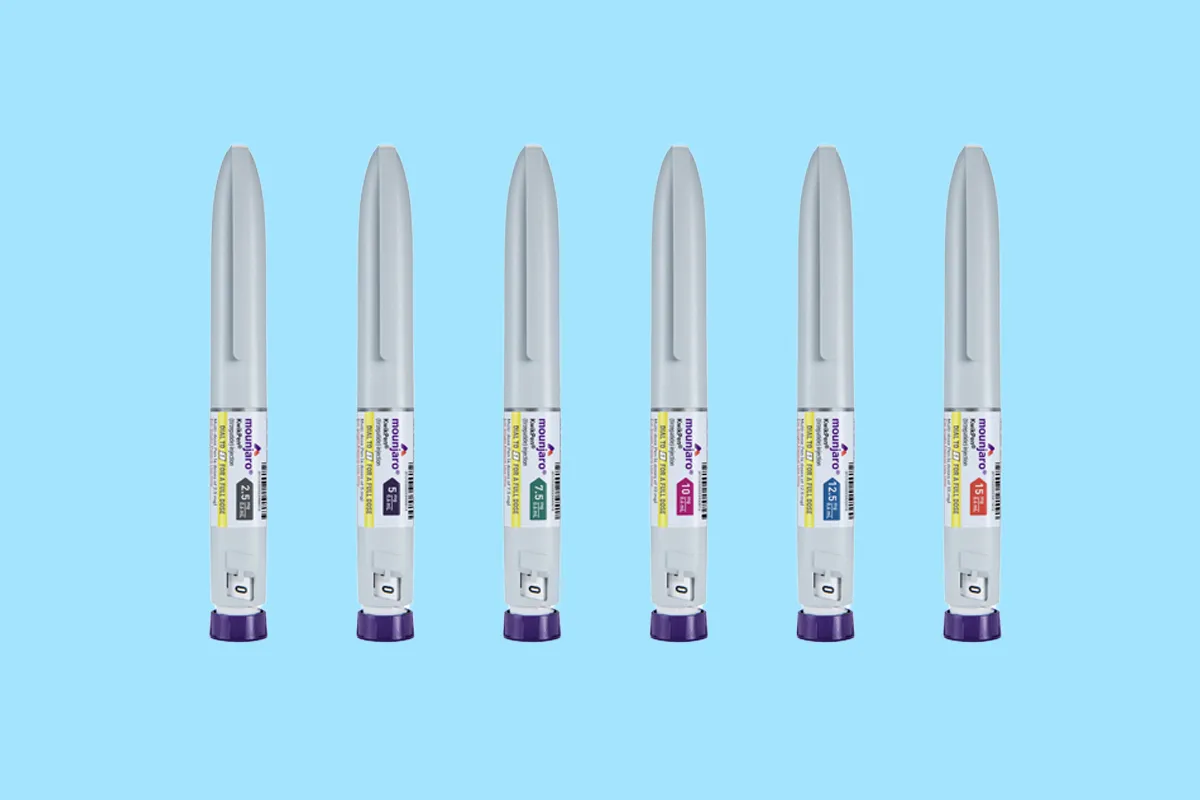
Protein on weight loss medication: how much you need and how to actually get it

Protein on weight loss medication: how much you need and how to actually get it

How much protein do you need on Wegovy or Mounjaro? Why it protects muscle and long-term results.

Your daily protein target on Wegovy or Mounjaro, and practical ways to reach it with a small appetite

If you take one nutrition action while you are on Wegovy or Mounjaro, make it this one: get enough protein, every day, at every meal. It is the simplest thing you can do to make sure the weight you lose is the weight you want to lose, and it pays you back in strength, energy and better long-term results.

Why protein suddenly matters so much

These medicines lower your appetite across the board. You eat smaller portions of everything, and that includes protein, right at the moment your body needs more of it than usual.

Here is why. Whenever anyone loses a significant amount of weight, by any method, some of what they lose is lean tissue: muscle, and a little bone. In body composition substudies of the big injectable trials, lean tissue made up roughly a quarter of the weight lost with tirzepatide and up to two fifths with semaglutide. The two proven counters are eating enough protein and doing regular strength work.

Muscle is worth protecting. It burns energy at rest, so keeping it makes maintenance easier later. It stabilises joints, protects bones, prevents falls and fractures as you age, and it is what lets you carry groceries, climb stairs and get off the floor without thinking about it. Fat you can regain easily. Muscle, especially in midlife and beyond, is much harder to win back.

There is a bonus, too: protein is the most filling of the major nutrients and helps steady your energy across the day, which makes the whole eating pattern on these medicines easier to sustain.

How much protein you need

The 2025 joint advisory on nutrition during GLP-1 treatment, issued by four leading American nutrition and obesity organisations, recommends:

  • 1.2 to 2.0 grams of protein per kilogram of adjusted body weight per day during major weight loss, or
  • a simple flat target of 80 to 120 grams a day, which works well for most adults and is far easier to track.

A practical way to personalise it, and the version we use with members: about 1 gram of protein per kilogram of your goal weight each day, spread over three meals. So a goal weight of 90 kg means about 90 grams of protein a day, roughly 30 grams per meal. Use your goal weight, not your current weight, for this maths; that keeps the target realistic and it is why the simple version lines up with the 80 to 120 gram range above. Research on how the body builds and keeps muscle also suggests spreading protein across the day like this works better than loading most of it into dinner.

Your ideal target depends on your body, kidneys and health conditions, so treat these numbers as a starting range and confirm your personal target with your care team or a dietitian.

What 30 grams actually looks like

Rough guide, per meal:

  • 120 to 150 g of cooked chicken, beef, lamb, pork or fish
  • 4 large eggs, or 3 eggs plus a slice of cheese
  • 250 g of Greek yoghurt with a small handful of nuts or seeds
  • 200 g of cottage cheese
  • A can of tuna or salmon plus a boiled egg
  • 300 g of tofu, or a big bowl of lentils or chickpeas with some grains
  • One scoop of a good protein powder in milk (check the label, most deliver 25 to 30 g per serve)

Ten ways to hit your target when your appetite is small

  1. Eat the protein first. If you only get through half your plate, make sure it was the protein half.
  2. Anchor every meal on a protein. Decide the protein first, then build the vegetables and the rest around it.
  3. Use a shake as a meal backup. On days a meal will not go down, a protein shake or a proper meal replacement drink beats skipping. In New Zealand, formulated meal replacements such as Optifast and OptiSlim also carry vitamins and minerals; standard protein powders are fine when the rest of your day has variety.
  4. Make breakfast count. Many people find breakfast the hardest meal on these medicines. Greek yoghurt, eggs, or a shake all work, and starting the day with protein makes regular eating easier.
  5. Keep no-effort protein on hand. Boiled eggs, cheese, tinned fish, edamame, yoghurt pottles, milk. Low appetite plus effort equals skipped protein.
  6. Upgrade rather than add. Swap toast for eggs on toast, swap plain pasta for pasta with mince, stir milk powder into porridge or soup.
  7. Do not fear dairy. Milk, yoghurt and cheese are some of the easiest proteins to get down when your appetite is low, and they bring calcium for your bones.
  8. Track it for one week. Most people are shocked to find they are eating 40 to 50 grams a day, not 90. A week with a free tracking app is usually enough to calibrate your eye.
  9. Watch for the skipped-meal drift. After months on treatment, it is easy to slide into one meal a day. That is when protein intake quietly collapses; a food diary for a fortnight brings it back into view.
  10. Ask for help if it is not working. If food aversions, nausea or a tiny appetite are keeping you under target, talk to your care team. Sometimes the answer is dietitian support, and sometimes it is adjusting the dose, because the goal is not the smallest possible appetite. It is fat loss with your muscle intact.

Protein works best with its partner

One thing the research is blunt about: protein alone is not enough to fully protect your muscle. The signal that tells your body to keep muscle is using it. Two or three strength sessions a week, even short home ones, roughly doubles the protection. Our guide to strength training on weight loss injections shows how to start from wherever you are.

For the full picture of the habits that drive results on these medicines, see Getting the best results on Wegovy or Mounjaro.

This article is general information, not personal medical advice. Your own targets and treatment plan come from your prescriber and care team.

Existing members: want help with your protein plan? Log in at member.wellrevolution.com and start a priority chat.

New to Well Revolution? Start an online weight management assessment with one of our NZ-registered doctors.

References

  1. American College of Lifestyle Medicine, American Society for Nutrition, Obesity Medicine Association, The Obesity Society. Nutritional priorities to support GLP-1 therapy for obesity: a joint advisory. American Journal of Clinical Nutrition. 2025. Link
  2. Wilding JPH, et al. Once-weekly semaglutide in adults with overweight or obesity (STEP 1, including body composition substudy). New England Journal of Medicine. 2021;384:989-1002. Link
  3. Look M, et al. Body composition changes during weight reduction with tirzepatide in the SURMOUNT-1 study of adults with obesity or overweight. Diabetes, Obesity and Metabolism. 2025. Link
  4. Prado CM, et al. Muscle matters: the effects of medically induced weight loss on skeletal muscle. The Lancet Diabetes and Endocrinology. 2024;12(11):785-787. Link
  5. Leidy HJ, et al. The role of protein in weight loss and maintenance. American Journal of Clinical Nutrition. 2015;101(6):1320S-1329S. Link
  6. Mamerow MM, et al. Dietary protein distribution positively influences 24-h muscle protein synthesis in healthy adults. Journal of Nutrition. 2014;144(6):876-880. Link
  7. Sardeli AV, et al. Resistance training prevents muscle loss induced by caloric restriction in obese elderly individuals: a systematic review and meta-analysis. Nutrients. 2018;10(4):423. Link
Protein on weight loss medication: how much you need and how to actually get it

We’re saving time in people’s lives by making healthcare easier.

Seeing a doctor is as easy as sending a text

Concerned, need advice, a prescription, refill or referral?
Chat with a GP now